Anjali Mudra
also known as Namaste Mudra · the gesture of offering
Palms pressed together at the heart — a gesture of offering, gratitude and inner balance. Anjali Mudra is the easiest mudra to learn, and one of the quickest ways to calm and centre the mind.
- Also calledNamaste Mudra
- ElementAll five elements
- HandsPalms together at the heart
- Practice5 – 15 minutes
- DifficultyThe easiest to learn
- Best forCalm, focus, humility
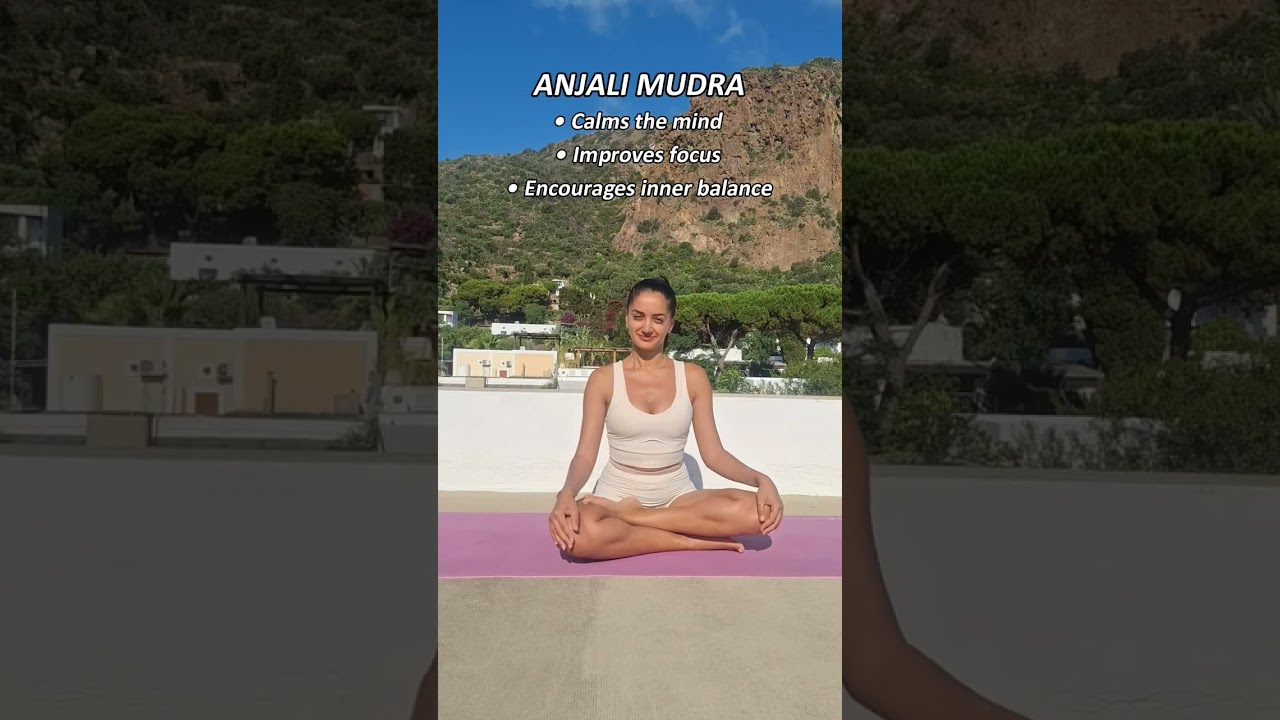
▶ Watch how to form it
What Anjali Mudra means
In Sanskrit, anjali means a divine offering. Bringing the palms together in this way is a quiet act of reverence, and its many subtle benefits are said to bring us a little closer to the divine.
It is also the simplest of all mudras. Most of us learn to fold our hands like this as young children, almost as soon as we can do it on purpose. In yoga practice, the palms meet in front of the heart chakra with the fingers pointing upward, pressed together firmly and evenly.
Two halves, one whole
Joining the hands is believed to bring the two hemispheres of the brain into alignment — the logical, reasoning left side and the creative right side. In the same way, the gesture unites intuition and logic, feminine and masculine, and the strong and sensitive sides of our nature.
How to practise Anjali Mudra
- Sit comfortablySettle on a chair, a cushion or cross-legged in Sukhasana — whatever lets you sit at ease.
- Lengthen your spineLet your back rise tall and relaxed. You may gently draw your chin in for a soft stretch along the back of the neck.
- Join your palms at the heartBring your hands together in front of your heart centre, the Anahata chakra, fingers pointing upward. Press the palms together evenly and firmly.
- Turn your attention inwardClosing your eyes is optional, but it helps you notice energy gathering at the centre of your chest as your awareness settles on the heart.
- Breathe, release, repeatTake a few slow, deep breaths, then lower your hands and rest them in your lap. Repeat the sequence several times.
Tip: each time your palms meet, picture the two sides of your energy coming together in balance and harmony.
Benefits of Anjali Mudra
Grounding and humility
The namaste gesture expresses greeting, humility and gratitude all at once. Practising it lets you feel that same grounding and humility on the inside.
A positive, gathered mind
Bringing the two halves of the brain together helps them work in better coordination, focusing your thoughts — many people find their mind filling with positive thoughts.
Calm breath, calm mind
Slow breathing at the heart steadies the rhythm of the breath, soothes a restless mind almost immediately and supports healthy oxygen flow in the blood.
Emotional balance
The gesture awakens the Anahata, or heart chakra, at the centre of the chest — helping you manage your emotions with more ease.
Focus and memory
Regular practice also stimulates the Ajna chakra between the eyebrows, the body's centre of concentration, sharpening focus, memory and awareness.
Stronger intuition
The pituitary gland, seen as the seat of intuition, sits between the brain's two halves. Anjali Mudra is traditionally said to balance the pituitary and adrenal glands and heighten intuition.
How long and how often
Anjali Mudra works in short rounds: hold the gesture for a few slow, deep breaths, release your hands to your lap, then repeat several times. Five to fifteen minutes is a comfortable session.
Because it is so simple, it also fits easily into the day — a few rounds before meditation, at the start of your yoga practice, or whenever you need a moment of calm.
Practising with care
- Press the palms together firmly but without strain — ease off if you feel tension in your wrists, elbows or shoulders.
- Keep your shoulders relaxed and down, away from your ears, while your hands are raised.
- Mudras complement a healthy lifestyle and medical care — they are not a replacement for it. If you have a health condition, read the practice guidelines and speak to your doctor.
Anjali Mudra — common questions
Is Anjali Mudra the same as Namaste?
Why is Anjali Mudra called the easiest mudra?
How long should I practise Anjali Mudra?
Do I need to close my eyes?
Does Anjali Mudra have physical benefits?
Mudras to explore next
Learn Anjali Mudra and nine more
Anjali Mudra is one of ten essential gestures in Mudras for Beginners — a simple, illustrated guide to starting your practice.