Gyan Mudra
also known as Chin Mudra · the seal of wisdom
The classic seal of wisdom. Joining the tip of the thumb to the tip of the index finger, Gyan Mudra quietens the mind, sharpens attention and makes it easier to settle into meditation.
- Also calledChin Mudra
- ElementAir
- FingersThumb tip + index tip
- Hold for5 – 15 minutes
- How oftenUp to 3 times a day
- Best forFocus, calm, sleep
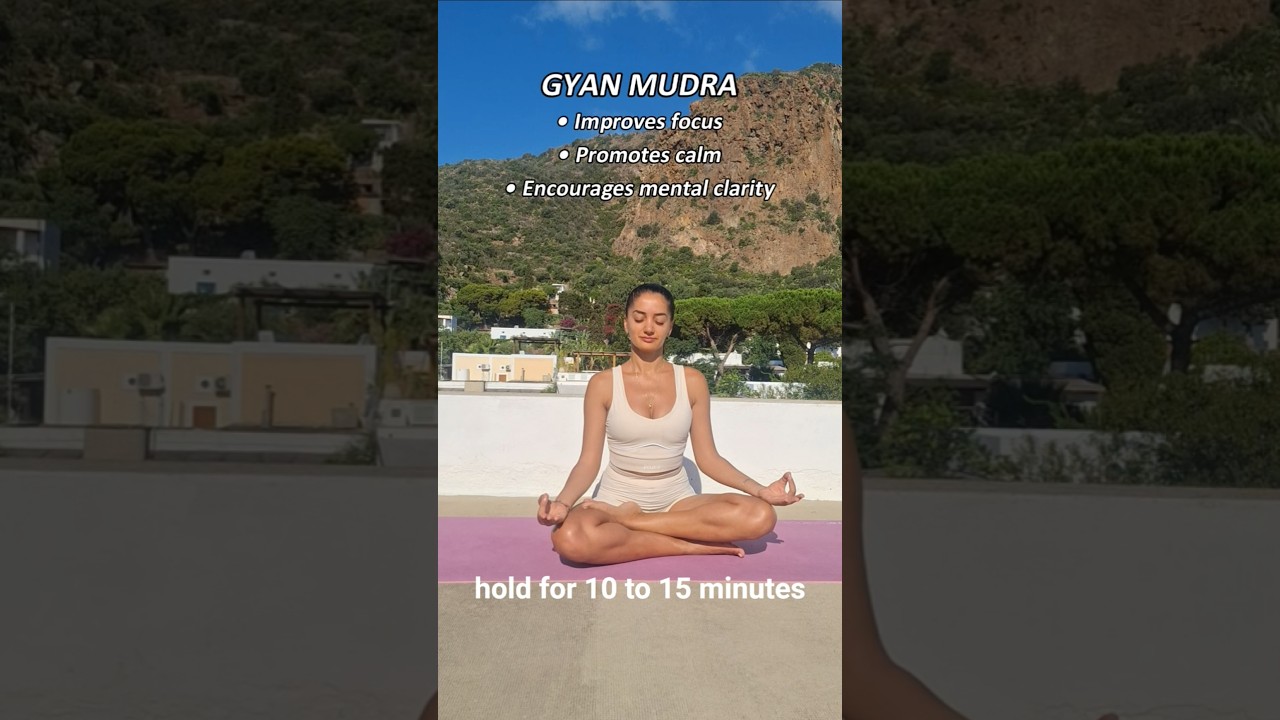
▶ Watch how to form it
What Gyan Mudra means
The name comes from the Sanskrit gyan, meaning knowledge or wisdom — so this is, quite literally, the gesture of knowing. Its second name, Chin Mudra, comes from chin, meaning consciousness.
It is one of the most recognisable hand positions in all of yoga. You will find it in a great many seated meditation postures, and it is a natural partner for pranayama, the yogic practice of breath control.
Two fingers, one meaning
In this gesture the index finger stands for the individual self, and the thumb for the universal, supreme consciousness. Bringing their tips together is a quiet picture of the two becoming one — the self meeting the wider whole.
How to practise Gyan Mudra
- Find a steady seatSit cross-legged in Sukhasana or Padmasana (lotus), kneel in Vajrasana, or sit upright on a chair — whichever lets you stay comfortable. If you can hold your focus easily, you can also stand tall in Tadasana (mountain pose).
- Lengthen your spineKeep your back straight and lift your chest and head gently. Let your shoulders drop and soften.
- Rest your handsPlace the backs of your hands on your knees, palms turned up towards the sky.
- Join thumb and index fingerOn each hand, let the tip of the thumb meet the tip of the index finger. Keep the middle, ring and little fingers extended but relaxed.
- Close your eyes and breatheBring your attention to your breath and let it settle into an easy rhythm. Stay here for 5 to 15 minutes.
Tip: the fingertips should simply touch — there is no need to press. Practise with both hands at the same time.
Benefits of Gyan Mudra
Sharper focus
Steadies wandering attention and improves concentration — the foundation every meditation is built on.
Calm and stress relief
Relaxes the body and settles the mind, making it easier to step back from everyday worries.
Lighter mood
Linked with the root chakra, it is traditionally used to release tension and lift feelings of low mood and depression.
Restful sleep
Regular practice is traditionally used to help prevent insomnia and other sleep troubles.
Deeper meditation
Brings a sense of openness and ease, helping you sink more naturally into meditation and spiritual practice.
The Ayurvedic view
Ayurveda sees it as strengthening the air element — stimulating the brain and supporting the mind, nervous system and pituitary gland.
How long and how often
Gyan Mudra can be practised up to three times a day, holding it for 5 to 15 minutes each time — a total of up to 45 minutes daily.
If you are new to mudras, begin at the shorter end and build up gradually as sitting still becomes more comfortable.
Practising with care
- Keep the touch between the fingertips light, and stop if you feel any strain in your hands or shoulders.
- Practise somewhere quiet where you can sit undisturbed; choose a chair rather than a floor posture if sitting cross-legged is uncomfortable.
- Mudras complement a healthy lifestyle and medical care — they are not a replacement for it. If you have a health condition, read the practice guidelines and speak to your doctor.
Gyan Mudra — common questions
Are Gyan Mudra and Chin Mudra the same?
How long should I hold Gyan Mudra?
Can I practise Gyan Mudra standing up?
Can I combine Gyan Mudra with breathing exercises?
Can Gyan Mudra help with sleep?
Mudras to explore next
Learn Gyan Mudra and nine more
Gyan Mudra is one of ten essential gestures in Mudras for Beginners — a simple, illustrated guide to starting your practice.