Prana Mudra
also known as Pran Mudra · the seal of life force
The gesture of life energy. By joining the thumb with the ring and little fingers, Prana Mudra is used to recharge a tired body, lift a low mood and build steady strength from the root up.
- Also calledPran Mudra
- ElementsBoosts Earth + Water
- FingersThumb + ring + little
- Hold for5 – 15 minutes
- How oftenUp to 3 times a day
- Best forEnergy, immunity, mood
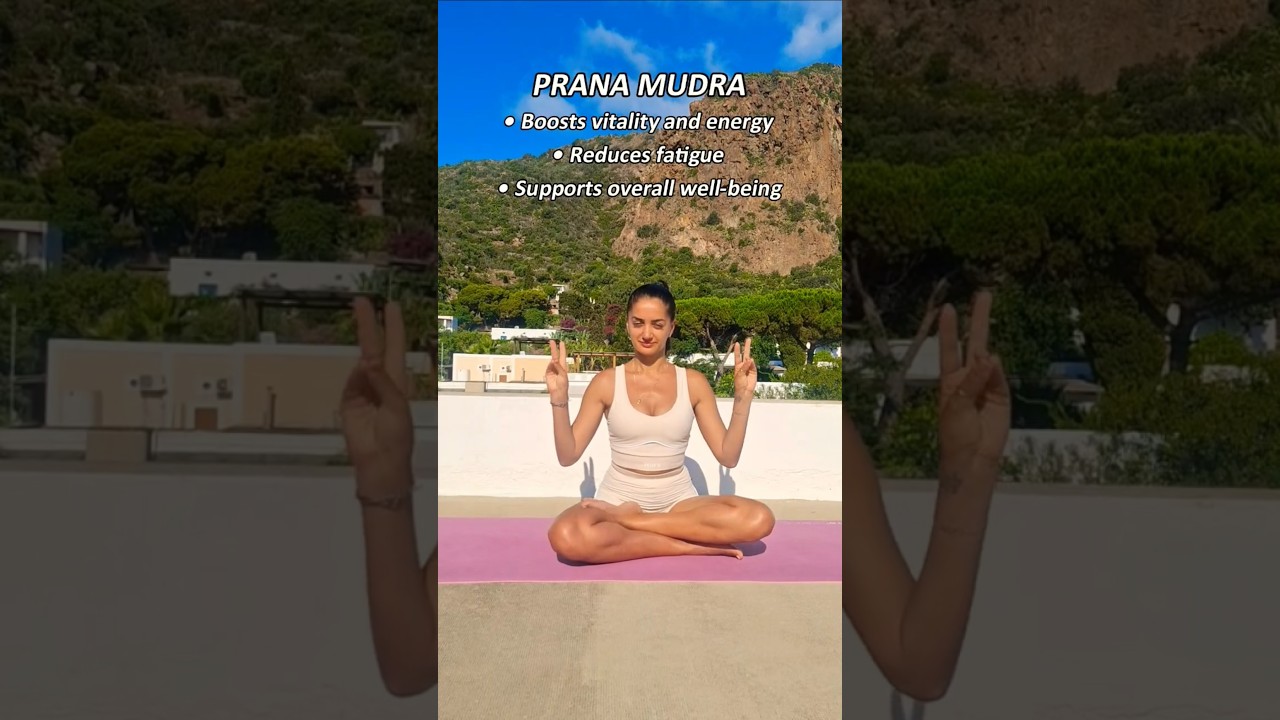
▶ Watch how to form it
What Prana Mudra means
Prana is the Sanskrit word for life force — the energy that keeps every part of us alive. In yogic thought, Pran Vayu is one of the ten vital winds that move through the body: the breath of life itself, active in the nostrils, face, heart and lungs and reaching down as far as the navel.
Prana Mudra awakens the Mooladhara, the root chakra at the base of the spine. From this foundation, fresh vitality is said to rise and spread outward through the nervous system and the other chakras. In elemental terms, the gesture strengthens earth and water — and with them the Kapha dosha — while calming fire and the Pitta dosha. That makes it especially welcome on days when you feel drained, flat or low.
Vision, in both senses
Prana Mudra is linked with healthier eyesight, but tradition gives it a second meaning too: clear inner vision. It is a gesture for seeing where your life is heading and picturing the path that will take you there.
How to practise Prana Mudra
- Settle into your seatSit comfortably, either on a chair or on the floor, with your back upright.
- Rest your handsLet your arms extend and rest the backs of your hands on your thighs, palms facing up.
- Form the gestureBring the tips of your ring finger and little finger to meet the tip of your thumb. Keep your index and middle fingers straight.
- Breathe in fresh energyTake slow, deep breaths. With each inhalation, imagine new energy flowing in and every cell of your body being recharged.
- Stay soft and steadyHold the gesture with both hands, keeping your shoulders relaxed, for 5 to 15 minutes.
Tip: many people notice a gentle vibration or tingling through the body as they settle into this mudra. It is also a quick reset you can turn to any time you feel stressed or worn out.
Benefits of Prana Mudra
Energy and stamina
Restores vitality, strength and endurance, and helps lift general weakness and long-standing tiredness.
Stronger immunity
Regular practice is valued for building the body's natural resistance and overall resilience.
Heart, lungs and circulation
Supports healthy lungs, invigorates the heart and encourages free-flowing circulation — traditionally said to clear blockages along the way.
Relief for tired limbs
Helps ease aching legs and limbs, muscle cramps, discomfort in the veins and numbness anywhere in the body.
A brighter outlook
Brings joy, enthusiasm, hope and perseverance, while softening stress, anger, irritability and restlessness.
Eyes and memory
Associated with better eyesight, and with sharper recall for those prone to forgetfulness.
How long and how often
For the best results, practise Prana Mudra three times a day for 5 to 15 minutes at a time — up to 45 minutes in total each day.
Outside your regular sessions, you can also return to it for a few minutes whenever you feel stressed or low on energy.
Practising with care
- Let the fingertips meet lightly, and stop if you feel strain in your hands, arms or shoulders.
- Choose a chair if sitting on the floor is uncomfortable — what matters is an upright, relaxed posture.
- Mudras complement a healthy lifestyle and medical care — they are not a replacement for it. If you have a health condition, read the practice guidelines and speak to your doctor.
Prana Mudra — common questions
What does Prana Mudra mean?
Which fingers are used in Prana Mudra?
How long should I practise Prana Mudra?
Can I use Prana Mudra when I feel tired or stressed?
Can Prana Mudra help while fasting?
Mudras to explore next
Learn Prana Mudra and nine more
Prana Mudra is one of ten essential gestures in Mudras for Beginners — a simple, illustrated guide to starting your practice.