Adi Mudra
also known as the Primordial Mudra · the first gesture
The very first gesture. Adi Mudra is the soft thumb-in fist a newborn makes before the hands learn any other shape — a simple, soothing seal used to calm the nervous system and deepen the breath.
- Also calledPrimordial Mudra
- ElementCalms Air
- FingersThumb in palm, fist closed over
- PracticeIn short sessions
- Pairs withBreathing exercises
- Best forCalm, deep breathing
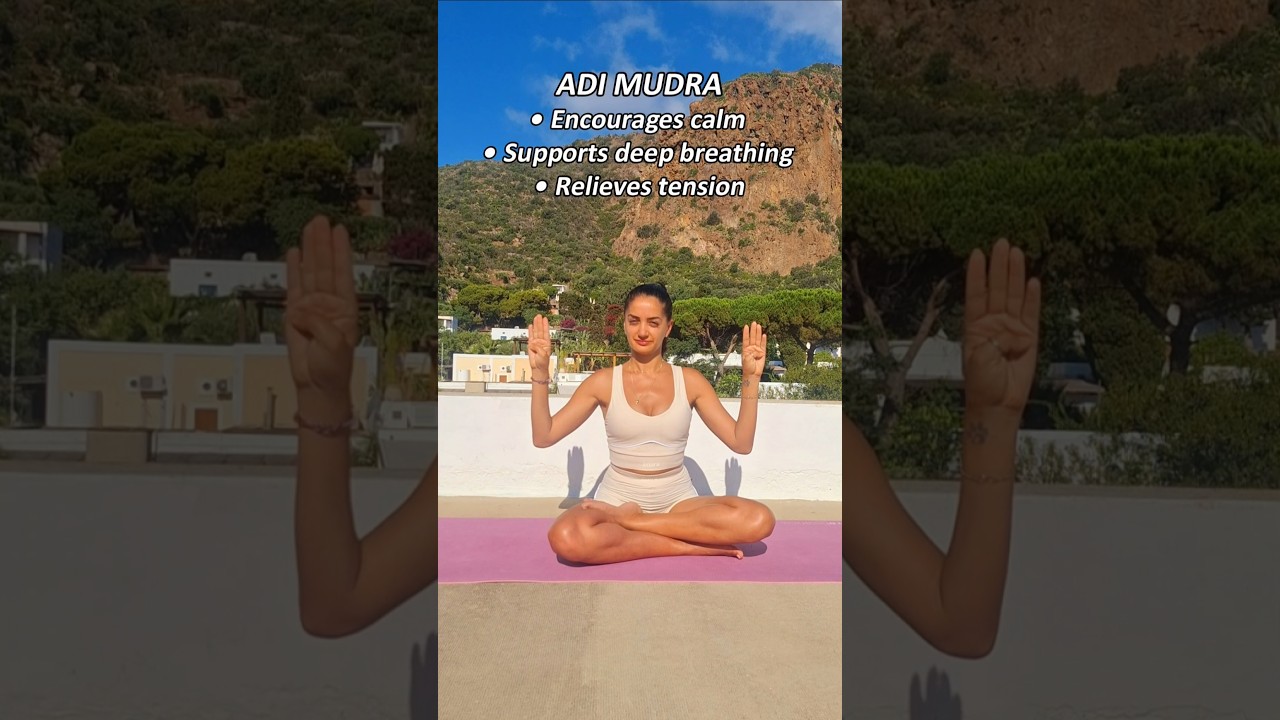
▶ Watch how to form it
What Adi Mudra means
Before our hands learn to make any particular shape, they fold into one natural, primal posture — the fist. You see it in the hands of every newborn baby. This very first gesture is the Adi Mudra, also called the Primordial Mudra or the Baby's Gesture.
In Sanskrit, adi means "first" and mudra means a seal or gesture. The name comes from the way a baby holds its hands in the womb — it is the first gesture we are able to form once we are born.
The gesture we are born knowing
Adi Mudra needs nothing to be learned — it is already there in our very first days. Returning to it is a little like returning to that first, settled, unhurried state of being.
How to practise Adi Mudra
- Take a comfortable positionSit in any meditative posture with your spine upright and your eyes closed. If sitting is uncomfortable, you can stand in mountain pose instead.
- Rest your handsSeated, rest your arms on your thighs or knees with the palms facing down. Standing, let your arms reach out a little so the hands sit just away from the thighs.
- Tuck the thumb inOn both hands, fold the thumb into the palm so its tip rests at the base of the little finger.
- Close the fist over itBring the other four fingers together, with no gaps, and fold them in over the thumb to form a soft fist.
- Hold gentlyKeep the pressure light and even across the palm and fingers — firm enough to hold, never so hard that it strains the thumb.
Tip: Adi Mudra pairs beautifully with breathing practice. Hold it as you breathe slowly and deeply to feel its full calming effect.
Benefits of Adi Mudra
Calms the nervous system
Its main gift is a settled nervous system — which in turn supports the many organs that depend on healthy nerves.
Deeper breathing
Combined with breathwork, it is said to increase lung capacity and oxygen intake and to strengthen the muscles of breathing.
Relaxed airways and vessels
Traditionally linked with easy, open breathing passages and relaxed blood vessels, supporting a steady, comfortable heartbeat.
Sharper mind and movement
The fist formation is associated with clearer logical thinking, mental sharpness and better motor coordination.
Smoother inner workings
Said to support easy movement in the abdominal organs — the stomach, liver and intestines — and good control of the musculoskeletal system.
Balanced hormones
Traditionally held to gently stimulate the endocrine glands, encouraging healthy hormone balance.
How long and how often
Adi Mudra is best built up gradually — as a beginner, there is no need to hold it for a long stretch. Divide your practice into shorter sessions that feel comfortable, rather than one long sitting.
It is especially rewarding held alongside slow, deep breathing, where its calming, breath-opening qualities come through most clearly.
Practising with care
- Keep the fist soft, with gentle, even pressure — pressing too hard can strain the thumb and defeats the calming purpose.
- Build up slowly rather than forcing a long hold, and release any time your hand feels tired.
- Mudras complement a healthy lifestyle and medical care — they are not a replacement for it. If you have a health condition, read the practice guidelines and speak to your doctor.
Adi Mudra — common questions
Why is it called Adi Mudra?
How do you form Adi Mudra?
What is Adi Mudra good for?
How long should I hold Adi Mudra?
Can I practise Adi Mudra standing up?
Mudras to explore next
Learn Adi Mudra and nine more
Adi Mudra is one of ten essential gestures in Mudras for Beginners — a simple, illustrated guide to starting your practice.