Apan Vayu Mudra
also known as Mritasanjeevani Mudra · the heart seal
One of the best-known therapeutic gestures. By folding the index finger in and joining the thumb, middle and ring fingers, Apan Vayu Mudra is traditionally used to support the heart, calm the system and ease everyday aches.
- Also calledMritasanjeevani Mudra
- ElementsBoosts Earth & Fire · calms Air
- FingersIndex folded; thumb + middle + ring
- Hold for5 – 15 minutes
- How often2 – 3 times a day
- Best forHeart, calm, digestion
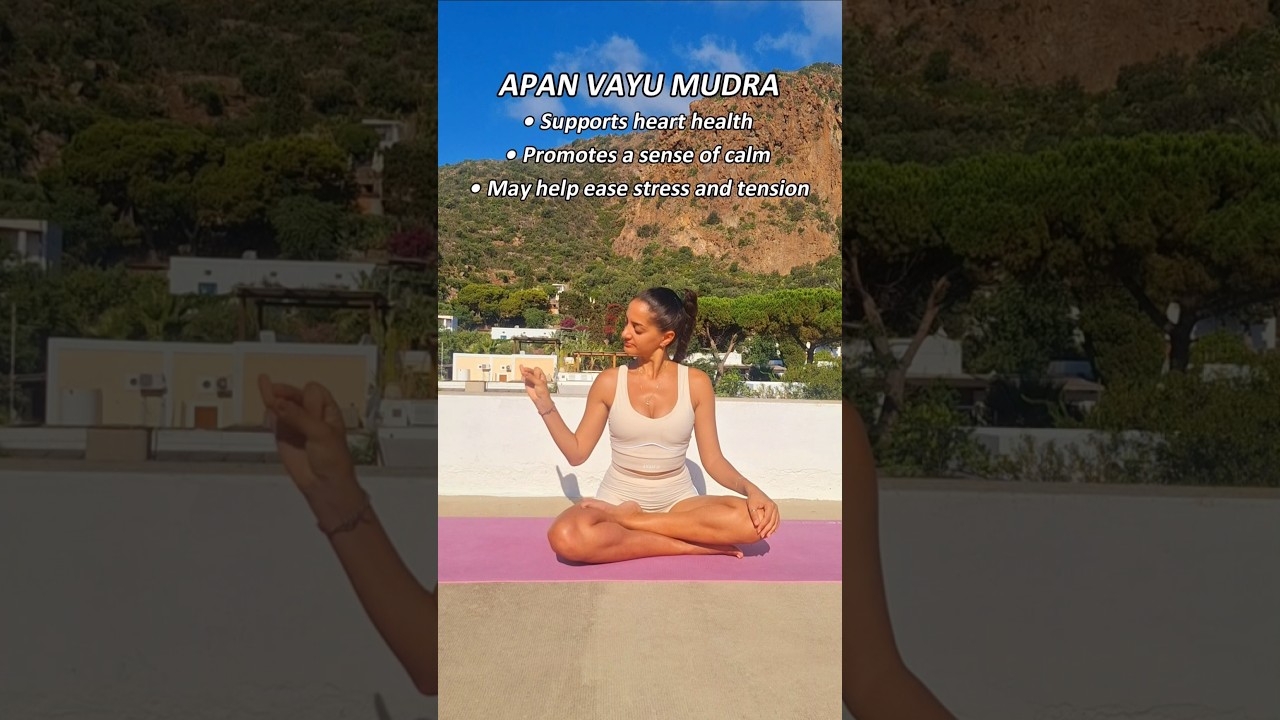
▶ Watch how to form it
What Apan Vayu Mudra means
Apan Vayu Mudra is one of the most valued therapeutic gestures in the tradition, often called the Mritasanjeevani Mudra — a name that speaks to its reputation as a gesture of the heart. It is traditionally recommended especially for people aged 40 and above.
Its effect is explained through the elements. Folding the index finger inward is said to calm the air element, which the tradition links with easing pain and relaxing body and mind. Bringing the thumb together with the middle and ring fingers is said to strengthen the fire and earth elements — associated with the body's cleansing and with steady vitality. In this way the gesture is traditionally held to support the circulatory, digestive, respiratory, excretory and nervous systems.
A gesture for the heart — not a substitute for care
Apan Vayu Mudra has a long reputation as a calming, heart-supporting practice. But it is a complement to medical care, never a replacement for it. If you or someone else may be having a heart attack — chest pain, breathlessness, pain spreading to the arm or jaw — call your local emergency number straight away.
How to practise Apan Vayu Mudra
- Find a comfortable seatSit either on the floor or on a chair, whichever lets you stay relaxed with a straight spine.
- Rest your handsLet your arms rest on your thighs with the palms facing upward.
- Fold the index fingerOn both hands, bend the index finger inward so its tip meets the base of the thumb.
- Join the three fingersBring the tips of the thumb, middle finger and ring finger together. Keep the little finger extended.
- Close your eyes and holdSettle your breath, and if you like, close your eyes. Hold for 5 to 15 minutes, or as long as is comfortable.
Tip: this gesture is the same as Apan Mudra, but with the index finger folded in as well. Practise with both hands at once.
Benefits of Apan Vayu Mudra
Heart and circulation
Long valued as a heart-supporting practice — traditionally used to encourage steady circulation and ease discomfort around the chest.
A calmer nervous system
Folding the index finger is said to calm the air element, soothing the nerves and relaxing both body and mind.
Everyday aches
Traditionally turned to for general aches and pains — headaches, toothache, back, neck and joint pain among them.
Digestion and acidity
Used to settle the digestion and ease acid reflux, which the tradition links closely with headaches and migraines.
Easier breathing
Valued as a support for the lungs and for conditions like asthma; some practise it for a few minutes before stairs or a brisk walk.
Gentle detox
Known as a cleansing gesture, said to help clear blockages and purify the system, bringing a sense of lightness and vitality.
How long and how often
Hold Apan Vayu Mudra for 5 to 15 minutes at a time, two or three times a day, up to a total of about 45 minutes daily.
Practise it with both hands together, in an unhurried way — it is a gesture for calming and steadying, so there is no need to rush.
Practising with care
- This mudra is not a treatment for a heart attack or any medical emergency. If you have chest pain, breathlessness or other warning signs, call emergency services at once — do not rely on a mudra.
- If you have a heart condition, high blood pressure, asthma or any ongoing illness, treat this as a gentle complement to your prescribed care, and never stop or replace medication on its own.
- Mudras complement a healthy lifestyle and medical care — they are not a replacement for it. Read the practice guidelines and speak to your doctor about your own situation.
Apan Vayu Mudra — common questions
What is Apan Vayu Mudra used for?
Why is it called Mritasanjeevani Mudra?
How is it different from Apan Mudra?
How long and how often should I practise it?
Can it replace my heart or pain medication?
Mudras to explore next
Learn Apan Vayu Mudra and nine more
Apan Vayu Mudra is one of ten essential gestures in Mudras for Beginners — a simple, illustrated guide to starting your practice.